MAPLE BOARDS
Curly maple cutting board: What it is, how it performs, and what to look for
Curly figure shows up in both hard and soft maple, so a curly maple cutting board needs its species confirmed. Learn what to check and how to care for it.
The short answer
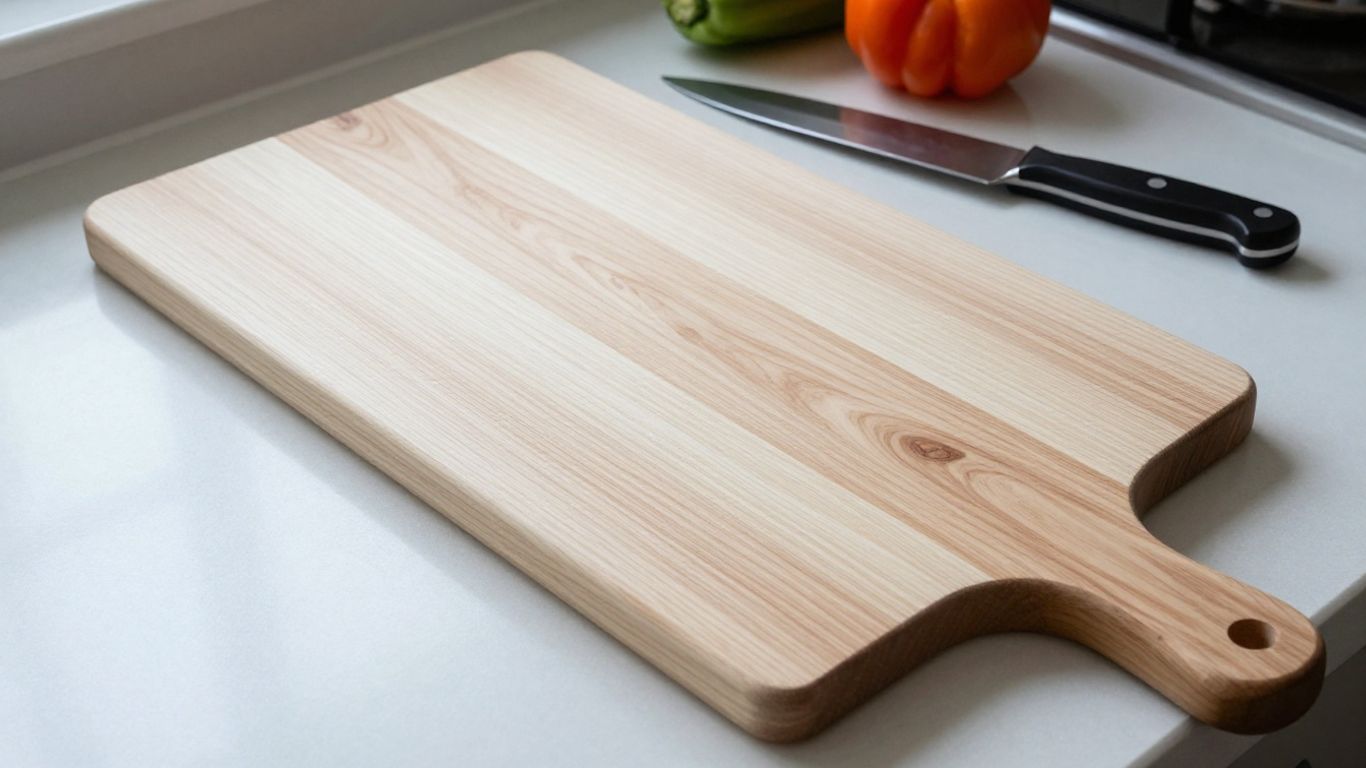
Curly maple is maple with a naturally rippled figure, not a separate wood species. The figure appears in both hard maple and soft maples such as red and bigleaf maple, so check which species a board uses. Its appearance is distinctive, but practical performance still depends on the wood, construction, and care.
- Curly figure changes how the grain catches light, not which maple species the board is.
- Hard maple offers a firm, dense cutting surface with a familiar knife feel.
- Grain orientation, board thickness, and sound glue joints matter as much as figure.
- Check the board’s flatness, finish, size, and construction before choosing it.
- Wash by hand, dry thoroughly, and condition the wood regularly.
What makes maple “curly”?
A curly maple cutting board is made from maple whose grain has a rippled, striped figure. The effect is visual: the wood seems to change shade as light moves across it. Curly figure does not identify a separate species, so the board’s practical qualities still depend on whether it is hard or soft maple and how it is built.
How figure appears in the wood
In curly maple, the grain fibers follow a subtle wave rather than a perfectly straight path. Light reflects differently from one part of that wave to another, creating bands that can look bright from one angle and darker from another. The figure is part of the wood itself, not a surface pattern applied to it.
That shifting appearance is easiest to see across a broad, well-lit surface. On a board, the grain direction and the way the wood is cut affect how clearly the figure shows. You may also see the figure described as tiger stripe or fiddleback; those names point to the look, not a different kind of maple.
Curly maple versus plain maple
Plain maple and curly maple can come from the same species. The difference is figure: a board with straight, relatively even grain may look quieter, while curly maple has visible waves that catch the light. Neither appearance alone tells you whether the board is hard maple, how well it was made, or how it will feel under a knife.
If performance is the priority, identify the wood species rather than relying on the figure. Hard maple has a Janka hardness rating of 1,450 lbf; soft maple covers several less-dense species. Our guide to hard maple and soft maple explains why that distinction matters more for daily use than a striking grain pattern.
Why the pattern varies from board to board
Curly figure is naturally variable. One piece may show broad, bold bands; another may have finer ripples or a figure that appears only when the light hits it at a particular angle. The pattern can also change across the same board, so a small sample or listing photo may not predict every detail of the finished surface.
Treat a photo as a guide to the overall character, not a promise of identical stripes. The same principle applies to other natural maple figures, including the small eye-shaped marks discussed in this guide to birdseye maple boards. Both are patterns in the wood, not separate species.
How does curly maple perform as a cutting surface?
Curly maple can work as a cutting surface when the board is made from suitable maple and assembled well. The figure does not automatically make a board tougher or more delicate. For everyday prep, the trade-off is simple: you get a distinctive look, but the basic knife feel and care needs remain those of the underlying wood and construction.
Hard maple’s density and knife feel
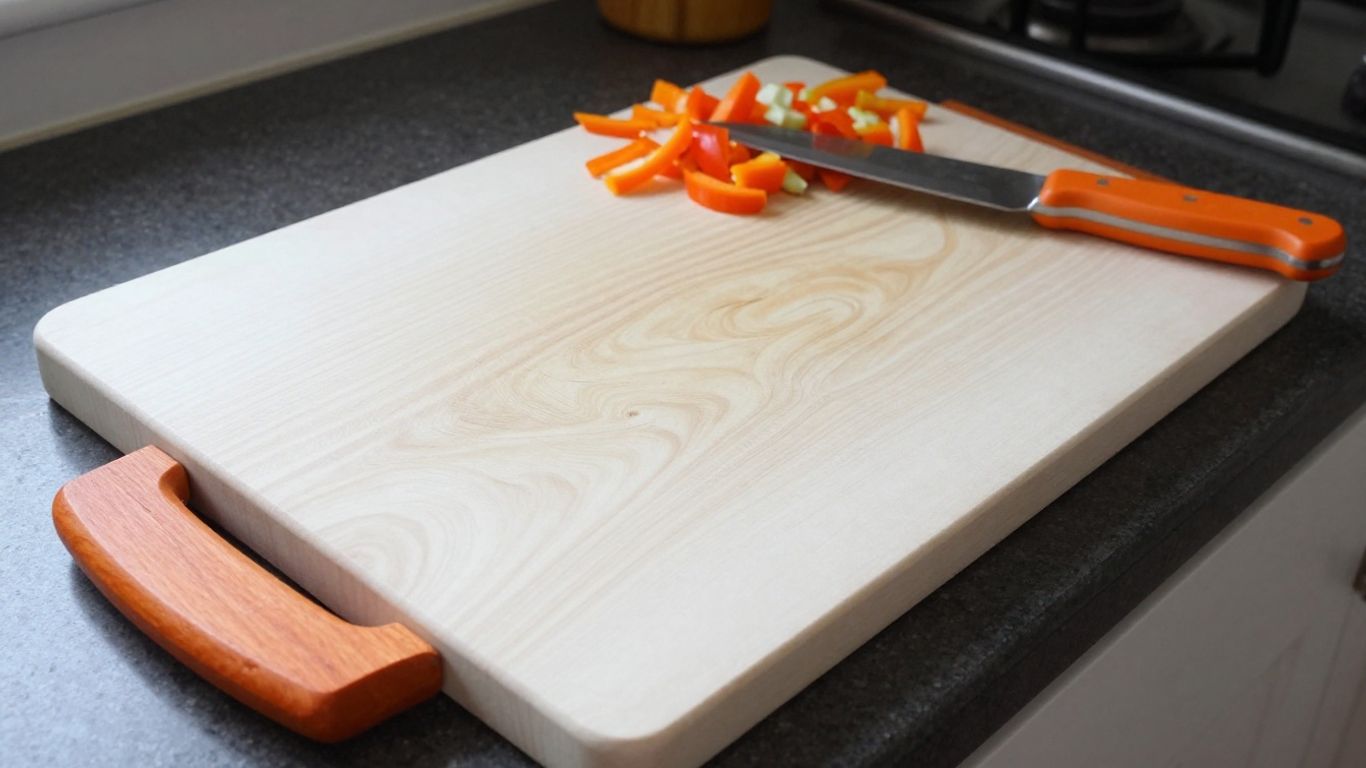
If the board is hard maple, expect a firm surface under the blade. Hard maple measures 1,450 lbf on the Janka scale, a measure of the force needed to drive a small steel ball into the wood. That density suits a board used for routine chopping, though no wood surface is immune to knife marks.
A sharp knife and a steady board help make prep feel controlled. Curly figure does not change the species’ hardness, so a board’s feel is not reliably judged by how dramatic its stripes look. The wood beneath the figure matters most when you are choosing for regular chopping.
Whether the figure changes durability
The curly pattern itself is not a durability rating. A sound board made from hard maple can serve well, but visible figure does not tell you whether the wood was dried properly, whether its glue joints are sound, or whether the board is stable. Those are separate construction questions.
Check the whole piece for cracks, loose joints, or areas that look poorly fitted. A seller’s description should also identify the maple type where possible. If it says only “maple,” ask whether the wood is hard maple or soft maple before treating the board as a heavy-use option.
How it compares with other common board woods
A wood comparison is most useful when it focuses on what you notice in the kitchen, not just color. The table below gives a broad starting point; species and board construction still vary, and a curly pattern does not change maple’s row.
| Board wood | General feel under a knife | Practical consideration |
|---|---|---|
| Hard maple | Firm and dense | A common choice for regular prep |
| Walnut | Generally less firm than hard maple | Darker color makes its appearance quite different |
| Cherry | Softer feel than hard maple | Light tasks and serving may suit its character |
| Bamboo | Often feels firm | It is a grass, not a hardwood, and construction varies |
Choose by the jobs you do most and how much upkeep you are willing to manage. If the curly figure is the reason you are drawn to maple, confirm the species and construction separately rather than assuming the pattern guarantees a particular performance.
How does construction affect the finished board?
Construction determines how the board handles use, cleaning, and storage. Curly maple can be arranged in different grain orientations, and those layouts affect the look and feel more directly than the figure alone. A beautiful face is a pleasure; flatness and solid joinery are what make it practical.
Edge grain and end grain layouts
Edge-grain boards show the long sides of the wood strips across the working surface. End-grain boards expose the ends of those strips, often creating a block pattern. Both can make useful boards when they are properly made, and neither layout guarantees quality on its own.
Look for consistent joints and a surface that feels smooth without rough transitions. For a specific example of dimensions and construction, the Bevel & Bond End-Grain Maple Cutting Board is listed as 17 by 13 by 1.75 inches and over 10 pounds. Those are product specifications, not a rule that every good board needs the same size or weight.
Board thickness, size, and stability
A larger, thicker board offers more working room and tends to feel more substantial, but it also takes more space to lift, wash, and store. A compact board is easier to handle, though you may run out of room when prepping several ingredients. Think about your counter space and the kind of meals you regularly make.
An edge-grain maple board can also feel quite different depending on its dimensions and thickness; this guide to edge-grain maple boards covers the role of heft and stability. Whichever style you choose, use a dry, secure work surface and check that the board sits flat before chopping.
Glue lines, accents, and wood movement
In a board assembled from multiple pieces, glue joints should look neat and closed rather than gapped or uneven. Contrasting wood accents can add visual interest, but they create more joints to inspect. A curly pattern is attractive on its own, so extra decoration is a matter of taste, not a performance upgrade.
Wood responds to changes in moisture, which is why washing and drying habits matter even for a well-made board. A board can move or develop cracks if it is repeatedly soaked or left wet; no construction style makes it immune. Give it a chance to dry fully between uses.
What should you check before choosing a board?
Choose a curly maple board for the figure only after you have checked the basics. Look at the species, construction, flatness, finish, and dimensions, then decide whether the pattern and price make sense for your kitchen. The trade-off is that the most dramatic figure can be harder to judge from a photograph than a simple, even grain.
Figure, color, and natural variation
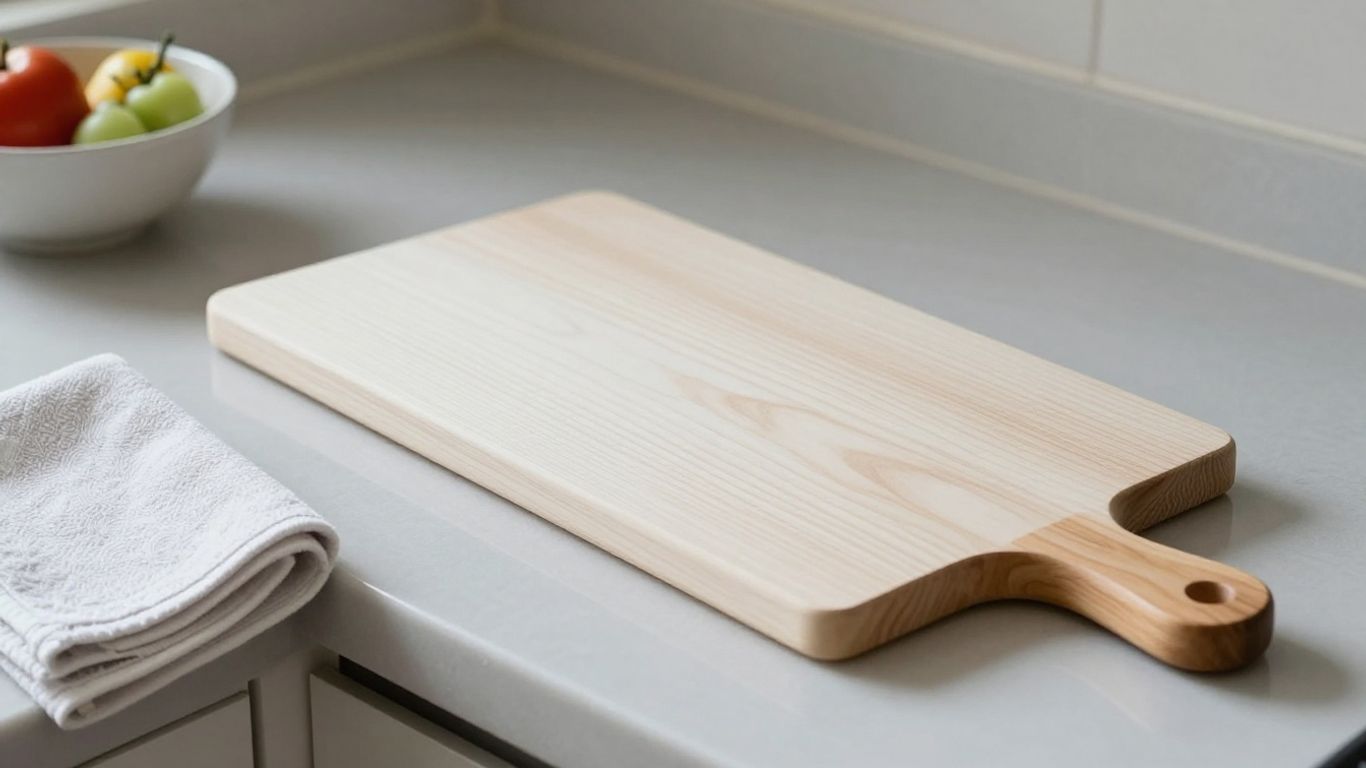
Expect real variation in both color and pattern. Curly bands may appear stronger in some areas, and the color can differ across a board or from the image you saw while shopping. If you care about the exact look, ask for a photo of the actual piece rather than relying only on a sample image.
A single-piece curly maple board can make the natural grain especially visible; this curly maple board example illustrates that kind of uninterrupted surface. It is an example of a product, not a guarantee that every curly maple board will look alike or be made the same way.
Flatness, finish, and signs of sound construction
Set the board on a flat surface if you can and check for rocking. Look over the edges and any glue lines for gaps, cracks, or rough spots. The finish should be smooth and suitable for food contact; ask what was used if the listing does not say.
A short buying check can keep the attractive grain from distracting you from the practical details:
- Confirm whether the board is hard maple or soft maple.
- Inspect the surface and edges for cracks, gaps, or rough transitions.
- Check that it sits flat and is manageable to lift and clean.
- Ask which finish was applied and what care it needs.
These checks are more useful than judging quality by figure alone. A well-finished, stable board with modest curls may serve you better than a dramatic piece with questionable joints.
Matching board size and style to kitchen use
Consider the space you have and what you cut most often. A small board can handle fruit, herbs, or a quick snack; a larger board gives you room for batch prep. As a concrete reference, the Bevel & Bond End-Grain Maple Cutting Board measures 17 by 13 inches, but that size is one option rather than a universal target.
If you often carve or prep messy ingredients, think about whether you want a juice groove and how much weight you are comfortable moving around. For everyday work, make sure you can wash the board easily and let it dry without leaning it in a cramped, damp spot.
How do you care for a curly maple cutting board?
Care for curly maple as you would another wooden cutting board: wash it by hand, dry it promptly, and replenish the surface with an appropriate conditioner. The figure does not need a special routine. The trade-off is modest but ongoing care in exchange for keeping the wood in good working condition.
Cleaning and drying after use
Wash the board with mild soap and warm water after use, then dry it with a towel and stand it upright so air can reach both sides. Do not soak it or put it in the dishwasher. Long exposure to water and uneven drying can contribute to movement and surface damage.
For a quick routine, keep these steps together rather than letting the board sit wet beside the sink:
- Scrape away food scraps.
- Wash both sides with mild soap and warm water.
- Towel-dry the surface and edges.
- Stand the board upright to finish drying.
That routine is simple enough to follow after ordinary prep, and it helps both faces dry more evenly. The Bevel & Bond care guidance also calls for hand washing and drying the board immediately, not dishwasher cleaning.
Oiling and conditioning the surface
When the wood looks dry or feels rough, apply food-grade mineral oil or a suitable board conditioner. A monthly application is a practical starting point, with frequency adjusted for how often you use and wash the board. Spread a thin coat over the surface and edges, let it absorb, then wipe away excess.
Bevel & Bond lists Board Balm as a mineral oil and beeswax conditioner. Whatever product you use, avoid olive oil and vegetable oil, which are not recommended for board care. A cutting board should not be left with a sticky film of excess conditioner.
Preventing warping, cracks, and deep stains
You cannot promise that a wooden board will never warp or crack, but sensible habits reduce avoidable stress. Do not leave it soaking, wet, or near strong heat; dry both sides and store it where air can circulate. Wipe up strongly colored foods soon after prep, since prolonged contact can leave stains.
Keep the board away from damp sink edges and hot appliances, and avoid sudden swings between very wet and very dry conditions. If it starts to feel rough, a light sanding followed by conditioning may help, provided the surface damage is minor. Deep cracks or a loose joint call for a closer assessment before continued food prep.
When is a curly maple board a good fit?
A curly maple board makes sense if you want a practical maple surface with a more visible natural pattern. It can work for ordinary food prep when the wood and construction are suitable, and it can also look at home on a serving table. Its main trade-off is that appearance may command attention while the board still needs the same regular care as other wood boards.
Choosing one for everyday food prep
For daily chopping, start with hard maple, a stable layout, a smooth finish, and a size you can comfortably wash and store. Make sure the board is flat and that any joints look sound. Curly figure is a welcome extra, but it should come after those essentials.
If you cook in batches, prioritize working area and stability; if you mostly slice a few vegetables, a smaller board may be easier to manage. Keep a separate board for tasks that would make cleanup awkward, such as handling raw meat, and follow standard food-safety practices for washing utensils and surfaces.
Using it for serving and display
The shifting grain can make curly maple especially appealing for serving bread, fruit, or cheese. If you use the board for both prep and presentation, clean it thoroughly and dry it before setting out food. A board that spends time on display still benefits from occasional conditioning and a dry storage place.
You can also choose a smaller board if serving is its main job. In that case, prioritize comfortable handling and a finish that is appropriate for food contact rather than paying extra attention to whether the figure is perfectly uniform.
Knowing when another wood or board style may suit you better
If you want a low-maintenance surface that can go through a dishwasher, a wooden board is not a match. If you need a very large, heavy work surface but have limited storage, a thick butcher-block style may be inconvenient. A plain hard maple board may also be the better choice if you prefer a quieter look or want to focus your budget on size and construction instead of figure.
Before you decide, consider whether the board’s pattern, weight, upkeep, and available workspace all fit your habits. Curly maple is best chosen with open eyes: it is maple with an appealing natural variation, not a special care-free version of it.
Choosing a curly maple cutting board
A curly maple cutting board pairs maple’s familiar working qualities with a naturally rippled grain pattern. Check the species, construction, flatness, and size before buying, then wash by hand, dry thoroughly, and condition it as needed. The figure makes each board distinctive, while sound construction and steady care make it useful.
Best for
- Daily chopping: hard maple with a stable layout, in a size you can wash and store.
- Batch cooking: put working area and stability first.
- Serving bread, fruit, or cheese: a smaller curly board that is comfortable to handle.
- A quieter look or a tighter budget: plain hard maple, with the money spent on size and construction.
- Dishwasher users: no wooden board is a match.
Frequently Asked Questions
Is curly maple a different species of maple?
No. Curly describes a figure in the wood, not a separate species. Check whether the board is made from hard maple or soft maple to understand its likely working properties.
Is curly maple good for everyday chopping?
It can be, especially when the board is made from hard maple and assembled well. Check its stability, finish, and size rather than using the figure as a measure of durability.
Does curly figure make a cutting board stronger?
The figure itself is not a measure of strength or durability. Construction, wood species, thickness, and care all affect how a board performs over time.
Will a curly maple cutting board scratch my knives?
A wooden board can leave knife marks, but the figure does not make the surface inherently harsher. A sharp knife and controlled cutting are useful, and hard maple has a firm feel under the blade.
How often should you oil a curly maple board?
About once a month is a practical starting point. Use food-grade mineral oil or a suitable board conditioner, and adjust if the wood starts looking dry sooner.
Can you put a curly maple cutting board in the dishwasher?
No. Wash it by hand with mild soap and warm water, then towel-dry and stand it upright. Dishwasher heat and prolonged moisture can stress the wood.
Why does curly maple look different in different light?
Its rippled grain reflects light at varying angles, so some bands appear brighter or darker as you move around the board. The effect can also vary across the same piece of wood.
What should you do next?
- Confirm the board is hard maple and check that it sits flat with sound joints.
- Pick a size for how you cook: a bigger surface for batches, a smaller one for a few vegetables or serving.
- Compare it with birdseye maple and quilted maple if you are still deciding on a figure.
- Wash by hand, dry thoroughly, and condition the wood as needed.
How this guide was put together
The Maple Board Guide team writes and fact-checks every guide on Maple Board Guide. Comparisons are based on maker specifications, published standards and food-safety guidance from sources such as the USDA, and each guide is reviewed and updated when specs or prices change. More about us.