MAPLE BOARDS
Fresh Pico de Gallo: A Knife-Skills Recipe and Prep Guide
A fresh pico de gallo recipe built around clean knife skills and a well-set cutting board, the details that make homemade salsa taste noticeably better.
Pico de gallo is one of the few recipes where technique matters more than ingredients. Five things that most cooks already have: tomato, onion, jalapeño, cilantro and lime. But move the knife well and drain the tomato right, and it tastes like something you'd order out. Rush it, and it turns into wet, oniony pulp within an hour.
This guide walks through the recipe and the prep habits that make the difference.
Quick Answer
Fresh pico de gallo is made from finely diced ripe tomato, white onion, jalapeño, cilantro, and lime juice, seasoned with salt and rested for about fifteen minutes. The technique that separates good pico from bad is uniform knife work, proper drainage, and letting the salt do its job before you serve it.
What do you need for pico de gallo?
Ingredients (serves 4–6 as a side)
- 4 medium ripe Roma tomatoes (about 1 lb / 450 g)
- 1/2 medium white onion
- 1 jalapeño, or to taste
- 1/2 bunch fresh cilantro
- Juice of 1 lime
- 3/4 teaspoon kosher salt, plus more to taste
Tools
- A sharp chef's knife
- A large cutting board (end-grain hardwood works well here; the wet ingredients don't slide the way they do on plastic)
- A small mixing bowl
- A fine-mesh strainer or a clean kitchen towel
- A damp kitchen towel to secure the board
That's it. No food processor. A processor turns pico into salsa in about three pulses, and once you've tasted a properly hand-diced version, you understand why hand work is worth the extra ten minutes.
How should you set up the board?
Before the knife touches anything, take thirty seconds to arrange the board.
- Lay a damp kitchen towel flat under the cutting board.
- Put a small bowl at the top-right corner of the board for finished ingredients.
- Put a trash bowl or compost bin within arm's reach.
- Squeeze the lime into the mixing bowl, add the salt, and set it aside.
Now the actual prep flows without stopping.
What order should you prep the ingredients in?
Order matters here. Cut dry things before wet ones, and save the juicy tomatoes for last so their liquid does not flood the board while you work on everything else.
Step 1: Cilantro
Wash and dry the cilantro thoroughly (wet herbs bruise). Pull the leaves off the top third of the bunch. The upper stems are tender and fine to use, but the thick lower stems get chewy. Gather the leaves into a small pile, press down lightly with your non-knife hand, and rock the knife through them in a few clean passes. Don't over-chop. Set them aside in the small bowl.
Step 2: Jalapeño
Slice off the stem end. Halve lengthwise. Scrape out the seeds and white ribs with the tip of your knife; that's where most of the heat lives. Slice each half into thin strips, then across into a small dice. Add to the cilantro bowl.
If you want more heat, leave some of the ribs in. If you want less, use half the pepper.
Step 3: Onion
Cut the onion in half through the root. Peel and lay one half flat side down. Make thin vertical cuts from the top toward the root, stopping just before you reach the root itself. Rotate ninety degrees and make thin horizontal cuts down through those, and you'll end up with a fine, even dice.
Move the diced onion into a small fine-mesh strainer. Rinse for ten seconds under cold water and pat dry. This one small step takes the raw bite off the onion without killing the flavor, and it helps keep the salsa from turning harsh after a night in the fridge.
Step 4: Tomato
The tomato is the ingredient most people get wrong. Cut each Roma in half lengthwise. Use the tip of your knife or a small spoon to scoop out the seeds and the wet inner pulp. Discard those; they're what makes pico watery.
Cut each seeded half into thin lengthwise strips, then across into a small dice roughly the same size as the onion. Uniformity matters here for texture more than looks; you want every bite to have the same balance of ingredients.
Step 5: Bring It Together
Add the tomato and onion to the mixing bowl with the lime and salt. Stir gently. Add the cilantro and jalapeño. Taste. Add salt or lime in small increments; pico shifts noticeably with even a quarter teaspoon of salt.
Let it rest, uncovered, for at least fifteen minutes at room temperature. This isn't optional. The salt draws just enough moisture from the tomato and onion to bring the flavors together, and the acid from the lime softens the raw edges.
How fine should you dice pico de gallo?
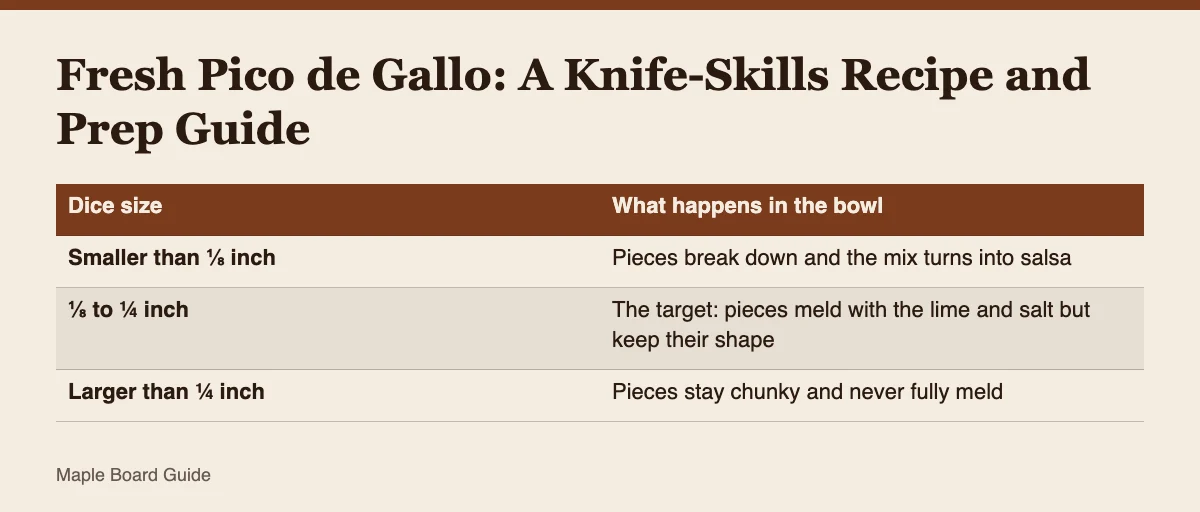
The fastest way to make pico taste better is to make the pieces smaller and more uniform. A one-eighth to one-quarter inch dice is the target. Larger pieces stay chunky and never fully meld with the lime and salt. Smaller pieces turn into salsa.
| Dice size | What happens in the bowl |
|---|---|
| Smaller than ⅛ inch | Pieces break down and the mix turns into salsa |
| ⅛ to ¼ inch | The target: pieces meld with the lime and salt but keep their shape |
| Larger than ¼ inch | Pieces stay chunky and never fully meld |
If your knife is dull, sharpen it or use a serrated tomato knife. A dull edge crushes the tomato instead of cutting it, which releases juice and turns the whole batch to soup.
How do you keep the board clean during prep?
Wet ingredients are hard on cutting boards. A few habits keep things clean:
- Sweep the board between ingredients; a bench scraper or the flat of the knife works fine.
- Rinse the board with warm water within a few minutes of finishing, then towel-dry it and stand it on edge.
- If tomato juice or onion has soaked in visibly, a light coat of food-grade mineral oil after drying restores the surface quickly.
A well-oiled end-grain board resists staining and odors better than a dry one, especially if you rinse it soon after prep. A dry or worn board picks up both.
How long does pico de gallo keep?
Pico is best within four hours of making it. The tomato keeps releasing water, so it gets progressively more liquid as it sits. In the fridge, it holds for about a day; after that, the texture goes soft and the flavors dull.
If you're making it ahead for a party, dice everything separately, refrigerate the components, and combine within an hour of serving.
What variations can you try?
- Roasted-jalapeño pico. Char the jalapeño over an open flame or under the broiler until the skin blisters, then peel, seed, and dice. This gives the pico a deeper, smokier heat.
- Fruit pico. Swap half the tomato for finely diced mango, pineapple, or peach. Pairs well with fish tacos and grilled chicken.
Both use the same knife work and the same rest time. Only the flavor shifts.
The Point
Pico de gallo is a recipe that rewards attention to small details: the cut size, the tomato seeding, the onion rinse and the fifteen-minute rest. None of those steps take much time, and together they turn five ingredients into something worth putting on the table.
Before you start
- Cost: Tomatoes, onion, jalapeño, cilantro and limes for about four servings usually cost $5 to $8, depending on the season.
- Time: About 15 to 20 minutes by hand with a sharp chef's knife. A German chef's knife (8 inch) handles the onion and tomato well; a paring knife is easier for seeding the jalapeño.
- Alternatives: Pulsing in a food processor is faster but gives a wetter, salsa-like texture. Store-bought fresh pico saves time but is usually cut larger and holds more liquid.
- Common mistakes: Leaving the watery tomato seeds in (the bowl floods), cutting tomatoes with a dull edge that crushes them, salting long before serving, and touching your eyes after handling jalapeño (wear a glove or wash your hands right away).
- Food safety: Rinse produce before cutting, and use a clean board, not one that just held raw meat.
Sources: USDA FSIS: Cutting Boards and Food Safety.
Best for
- Classic pico: the five-ingredient version, eaten within four hours of making it.
- Roasted-jalapeño pico: cooks who want a deeper, smokier heat.
- Fruit pico: fish tacos and grilled chicken.
- Milder heat: half a jalapeño with the seeds and ribs scraped out.
- Party prep: dice each ingredient ahead, chill them apart, and combine within an hour of serving.
Frequently Asked Questions
How long should pico de gallo rest before serving?
At least fifteen minutes, uncovered, at room temperature. The salt draws out just enough moisture to bring the flavors together, and the lime softens the raw edges.
Why does pico de gallo get watery?
Most of the water comes from the tomato seeds and wet inner pulp. Scoop them out before you dice, and serve the pico within four hours, since the tomato keeps releasing juice as it sits.
Can you make pico de gallo in a food processor?
You can, but a processor turns it into salsa in a few pulses. Hand dicing keeps the pieces separate and the texture fresh.
How do you take the raw bite out of the onion?
Put the diced onion in a fine-mesh strainer and rinse it under cold water for about ten seconds. Pat it dry before you add it to the bowl.
How long does pico de gallo last in the fridge?
About a day. After that, the texture goes soft and the flavors dull.
How do you make pico de gallo less spicy?
Scrape out the jalapeño seeds and white ribs, where most of the heat lives, or use half the pepper.
What should you do next?
- Sharpen your knife, or use a serrated tomato knife if your edge is dull.
- Lay a damp towel under the board and set out your bowls before you cut.
- Prep in order: cilantro, jalapeño, onion, then tomato.
- Let the pico rest fifteen minutes, then taste and adjust the salt and lime.
- Keep building knife skills with our guides to segmenting citrus and cutting a bell pepper into strips.
How this guide was put together
The Maple Board Guide team writes and fact-checks every guide on Maple Board Guide. Comparisons are based on maker specifications, published standards and food-safety guidance from sources such as the USDA, and each guide is reviewed and updated when specs or prices change. More about us.